Discover Seattle Through A “Coffee Crawl”
What in the world is a Coffee Crawl? If you go to Seattle, you can experience one for yourself. You probably already know that Seattle is well known for its huge number of coffee shops. The inhabitants of this city are coffeeholics like no other place on earth, I think. But you might be surprised at just how many coffee shops there are in Seattle!
Indeed, they say that there are so many places to have great coffee – each one of them with something unique to offer – that even the locals may not know about all of them. Hence the idea of a Coffee Crawl was born. This is the brainchild of people over at Seattle by Foot, an organization that aims to introduce both locals and visitors alike to what the city has to offer.
It is not surprising that Seattle has a lot more to offer in terms of coffee than any other city. After all, residents have a reputation for making this brew their priority. Figures show that despite the harsh economic times, people in Seattle continue to patronize their favorite coffee shops. There are even reports that sales have increased in the past year, when the effects of the crisis were at their highest.
Seattle by Foot’s Coffee Crawls seem to be the answer to the ever increasing demand for coffee in all its glory. There is more than Starbucks to be found in this city – try going on a Coffee Crawl and discover a whole new world of joe!
India’s Cafés Mix Interesting Brews
Here is something that I would love to see take off where I am at. In India, some of the biggest cafes are starting a new trend: coffee mixes with (more than a little) kick to them. From vodka to beer to rum to whiskey – these spirits are used to bring coffee drinking to a whole new level.
Take Café Coffee Day for example. They have a very interesting menu called High Spirits. Even more interesting is the fact that some of their drinks are NON-alcoholic, although they taste just like their alcoholic counterparts. India Times published a write up last month:
Its coffee beer has the same colour, froth, texture, fizz and taste of regular beer. The only difference is that the beverage is non-alcoholic and leaves a coffee aftertaste in your mouth. Cafe Coffee Day is also developing a slew of other coffee-based spirits, and is planning new product offerings around these non-alcoholic products.
Their menu is currently not available though – eager customers have to wait till they finish research and development. I am thinking it should not take forever. That article was written early in December. Who knows, they might be ready to launch the menu in a month or so? There are other cafes who have similar offerings, so the Indian coffee market is probably quite content right now.
As for me, I am wondering if a similar trend will be picked up by other countries. If I had the money, I would start my own coffee shop and have my own version of “High Spirits!” In the meantime, if any of you ever find yourself in India, why not look for a coffee shop or two with this kind of menu?
Chiangmaii Coffee, Anyone?
When I went to visit the “Land of Smiles,” which is what they call Thailand, I promptly fell in love. While I enjoyed the laid back hustle and bustle (if that makes sense) of Bangkok, I definitely appreciated the countryside even more. If there is one regret about that trip, it is that I was not able to visit the other parts of the country, one of them Chiangmai.
That’s why when we got this e-mail from Peter Bachner, my curiosity was really piqued. In his e-mail, he shares that he is “beginning the adventure of growing Arabica shade grown coffee in a mountainous jungle setting in Northern Thailand.” No one can resist the words “adventure,” “Arabica,” “shade,” and “Thailand” in one sentence, right?
So off I headed to his blog, titled “Peter Bachner’s Grand Adventure in Thailand…Growing Coffee in the Chiangmai Highlands!” That sure is a mouthful, but that is probably nothing compared to the project he is undertaking! By the way, he is doing this project in tandem with Chiangmai University, so he has excellent help.
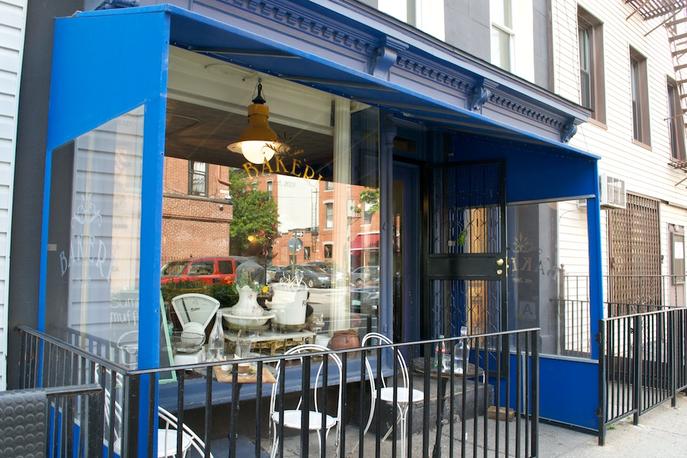
Now if you have not been to Thailand and you have not tasted their coffee, I am telling you that you are missing a LOT. I didn’t really think of Thailand as a place to get good coffee, but I had one of the most pleasant surprises of my life when our Thai guide for the day stopped by this quaint coffee shop just outside of Bangkok. Seriously, I had not had such a strong cup of coffee till that day! It was so good I had to buy a couple of boxes to bring home. (The coffee shop is shown in the picture above. Can anyone ID it for me?) I am unsure if this is the same type of coffee that Peter is growing.
In any case, his adventure is something worth following. Let’s join him?
No Electricity Coffee Maker
My gut reaction when I saw the initial description of this novel coffee maker was “WOW!” For one, it would be a perfect gadget for when you go camping or if the power ever goes out (both are very real possibilities in the Philippines; and it is the season for Philippine travel). Another reason, which is more altruistic, is that using less electricity means that you are cutting your carbon footprint down. That’s always a good thing, right?
Then again, when I took a closer look at the specs of this baby, I had second thoughts. Guess how long it will take you to brew coffee using the Hourglass coffee maker? Well, at least 12 hours! Now I am not the most impatient person in the world, but having to wait 12 hours for my cup of coffee is way too long.
The concept behind brewing coffee using the Hourglass is nothing new. The basic idea is to brew coffee using cold water and time (lots of the latter). Some coffee shops actually offer coffee brewed in this manner. Cold-brewed coffee has an intense flavor, making it perfect for those who like their coffee strong. More so, you can also store the extracted coffee in your fridge for up to two weeks. This means that you do not actually have to wait 12 hours each time you want a cup of joe.
Another advantage is that this brewing method is supposed to decrease acidity by around 70%. With this bit of information, I think that I just might give the Hourglass a try. Not all coffeeholics are excited by the Hourglass but it should at least prove to be a good conversation piece.
On A Starbucks Quest
And I thought I was addicted to coffee! Have you heard of this guy from California who is on a quest to visit every Starbucks store in the world? Rafael Antonio Lozano Jr., who now goes by the name Winter, started his quest way back in 1997. I was actually a bit surprised to hear that because it is only now that I came across his story.
Anyway, to date, Winter has visited around 9,100 Starbucks store in various countries. He is currently in the United Kingdom, where he is hell bent on visiting 400 locations spread all over England, Scotland, and Wales. His activities have even created a new word:
Starbuck – also Starbucking; to purposely visit Starbucks branches.
After his Great Britain “tour,” Winter is set to go Starbucking in other parts of Europe – Spain, Germany, and Portugal. So what does this coffee addict (or maybe Starbucks addict?) do when he visits a Starbucks? He says that in each branch that he visits, he orders a cup of regular brewed coffee, takes a picture, and then of course, documents it. He has a web site, aptly named Starbucks Everywhere, where he posts his pictures and writes about his endeavors.
I paid it a visit and I think that he could use some help in web site design, seriously. You can’t complain about the content, though. I love his entry on the Stone House Square (photo shown above), which, according to Winter, is the prettiest store in all of Maryland.
Anyhow, if you want to follow his adventures, visit his web site and join in the fun!
Coffee Exhibit At The Burke Museum
The best thing to do with coffee is to drink it, right? So what’s the next best thing? I dunno, but going to an exhibit all about coffee sounds pretty good to me and this is what’s in store for coffee lovers at The Burke Museum.
This museum is also known as The Burke Museum of Natural History and Culture and is found at the University of Washington in Seattle. It has been the Washington State Museum since 1899. This year, they have something new to offer visitors. From the 24th of January to the 7th of June 2009, they will be holding an exhibit all about our favorite bean, or drink, if you wish.
Dubbed Coffee: The World In Your Cup, the exhibit aims to welcome everyone to the wonderful world of coffee – from the beans to the brew. This is what the museum has to say about the exhibit:
Coffee: The World in Your Cup presents the story of one of the world’s most widely traded commodities and how it has affected cultures, economies, and environments across the globe. Coffee explores the environmental and social impacts of the coffee industry and recommends ways for consumers to make socially and environmentally responsible coffee purchases at the grocery store or in a coffee shop. Learn about the impacts of caffeine, the world’s most commonly-used drug, on your body, discover coffee’s early controversial reputation as a “revolutionary drink,” and consider the culture that surrounds coffee in the twenty-first century. Photos, maps, text, selected artifacts, audiovisual presentations, and hands-on demonstrations help visitors explore the fascinating world behind the coffee we drink.
There is plenty of time to go and visit. For further information, visit the museum’s web site or call them at 206- 543-7907.
Coffee Etiquette In Italy

I sure am not headed to Italy any time soon (though the partner and I are planning a trip next year) but I found this blog post on The Road To The Horizon very informative and funny as well.
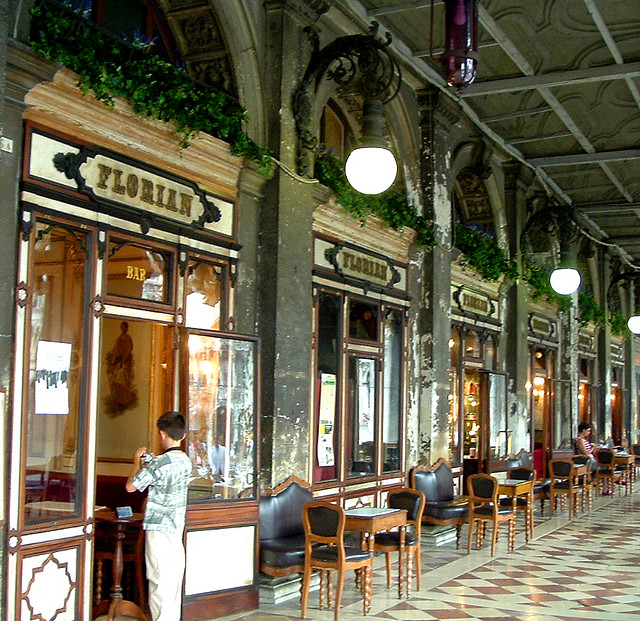
Did you know that Italians mostly drink their coffee at the bar standing up? If you drink your coffee at the table, then you are probably marked as a tourist (not always a good thing in my book).
How long does it take you to finish off an espresso? For me, it depends. Sometimes I finish it off really fast, sometimes I take my time. In Italy, espresso is meant to be drunk in a jiffy – 3 sips at the most.
As I was reading these interesting bits of trivia, I was thinking – would anyone really care if I didn’t follow the Italian customs when it comes to coffee? Well, I suppose that when you’re in Rome, you have to do as the Romans do. The blog post explains:
It is a habit, no, more a culture, strong: a religion, in Italy, not to drink any coffee with milk in it after breakfast. Cappuccino or Caffe Latte orders after 11 am are often laughed at or joked with.
While coffee bar tenders in the big cities will frown when you order a Caffe Latte in the afternoon, and exchange a glance of “Ah, tourists!” with the people standing at the bar, they will still serve you – all be it – reluctantly.
In restaurants, though, you might get occasions where the waiter will simply not serve you a coffee with milk in the afternoon or evening. The more remote the place, the more “mama and papa”-type the restaurant, the more chance of getting accused for “sacrilege”, turning that ‘friendly hospitable waiter’ into a rude tiran who wants nothing better than to see your backside as you walk out of the restaurant, while all you wanted was a “Cappuccino”.
Ok, ok I get it. Well, not really. I have to read this blog post over and over again – and take notes – before I even think of going to Italy.
Book Review: The Joy Of Coffee

How does one even begin to describe the joys associated with this bean, this brew? I honestly don’t know! Perhaps the best way would to be go ahead and concoct your own brew and share it with friends as you lounge around on a lazy Saturday afternoon. Or maybe, you can get this book by Corby Kummer and give it as a gift!
The Joy Of Coffee: The Essential Guide to Buying, Brewing, and Enjoying has been around for quite some time now. It has been recently updated and revised, though, to keep up with the changing landscape of the world of coffee. This book is an easy read with roundabouts 300 pages. From the growing of the beans to buying to roasting, storing, and brewing – all of these things are presented by Kummer.
I like how Kummer pays attention to the minutest details in his book as he recounts his experiences over the past several decades. I think it is his unique and authentic experience and knowledge that gives his book an edge over the countless other printed materials on coffee available in the market today. In the book, Kummer also shares tons of recipes which the average person – like you and me – can try out at home. For me, that is one of the best aspects of The Joy of Coffee.
So what are you waiting for? You can get a copy on Amazon for only about $10. Alternatively, if you want a preview before getting your own copy, you can check out Google Book Search.
Guatemalan Coffee: Nueva Alianza

For the socially conscious coffee lover, the best way to enjoy one’s coffee would be if the beans originate from fair trade practices. In today’s society wherein the less fortunate are being stepped on by the “haves,” it is sometime easy to just ignore the ills of society. Guatemalan coffee – fair trade, I should say – was brought to my attention by one of our readers who recently went on a trip there.
Brian Rogers and his wife went on a trip together and stumbled upon the little town of Nueva Alianza in Guatemala. In their travel blog, they featured this town, their history, and the good coffee that they produce. This incited me to do more research on Nueva Alianza coffee. As it turns out, there is more to this coffee than the beans themselves.
Reading up on the Comunidad Nueva Alianza (I suppose in English this is Nueva Alianza Community), I was impressed at how the families of the community were able to surmount the obstacles that had beset them for generations. They were preyed upon by a landlord and at some point, they banded together to stand up to the unfair practices. Today, the community is owned and ran by the same forty families who withstood the test of time. They are part of a cooperative which grows organic coffee and all the proceeds of their efforts are divided between the community members.
It is really impressive how they reached the point where they are right now. According to Brian Rogers, though, this kind of success is not common. There are countless other coffee farmers who have experienced the same problems and didn’t travel the same road as the Nueva Alianza members. For the Nueva Alianza community, however, their story is something that they would cherish and is something that would touch the rest of the world – through their coffee.
The Scent of Coffee
Something about the aroma that freshly brewed coffee brings entices people to check out what is brewing when they get the chance. While in most cases that smell is entirely different from the actual taste, sniffing the odor of freshly brewed coffee is something worth the try.
Even the non-coffee drinkers would agree there is a certain something in the scent of coffee. Deceiving is what best describes the proper preparation of these coffee roasts. The smell is truly something unexplainable. Tempting but not really deceiving, aroma is one of the main factors of being able to determine the quality of brewed coffee served worldwide.
Each part of the world has their own coffee manufacturing plants coming from finely refined plantations. Catering to both local and world class quality, it would all depend on how people would prefer their coffee mixture. Some would like it strong while some would want it mild. Whatever the case may be, coffee can cater to anyones desire anywhere.