
Coffee + Aspirin: Perfect Hangover Cure

It’s almost New Year’s Eve, and I’m pretty sure that the next day will see many suffering from too much partying; and by extension, looking for the perfect hangover cure.

There are so many hangover cures that have been debunked by science over the years, but coffee remains to be one of the most widely accepted hangover cures. Sure there has been studies explaining why coffee doesn’t really help anyone with a hangover. Some even say that it can make a hangover worse. Two of the main reasons cited for this is that it can make a person more tired after the caffeine boost wears off, and can make a person even more dehydrated since it is a diuretic.

Well the ever fickle science community (or at least researchers of this particular study) finally agree to what we coffee lovers have known all along, the combination of coffee and aspirin is really perfect as a hangover cure…at least if you are a rat. According to Professor Michael Oshinsky, of Thomas Jefferson University in Philadelphia, rats who were given doses of caffeine and anti-inflammatories responded well to the treatment and were relieved of the headaches. The headaches, which were induced by making the rats drink ethanol (a pure form of alcohol), is similar to the migraines we experience after having a drink too many.

So while the scientists get stuck debating on whether they coffee will cure a hangover or not, I will just have my coffee maker and a bottle of aspirin on hand day after New Year.


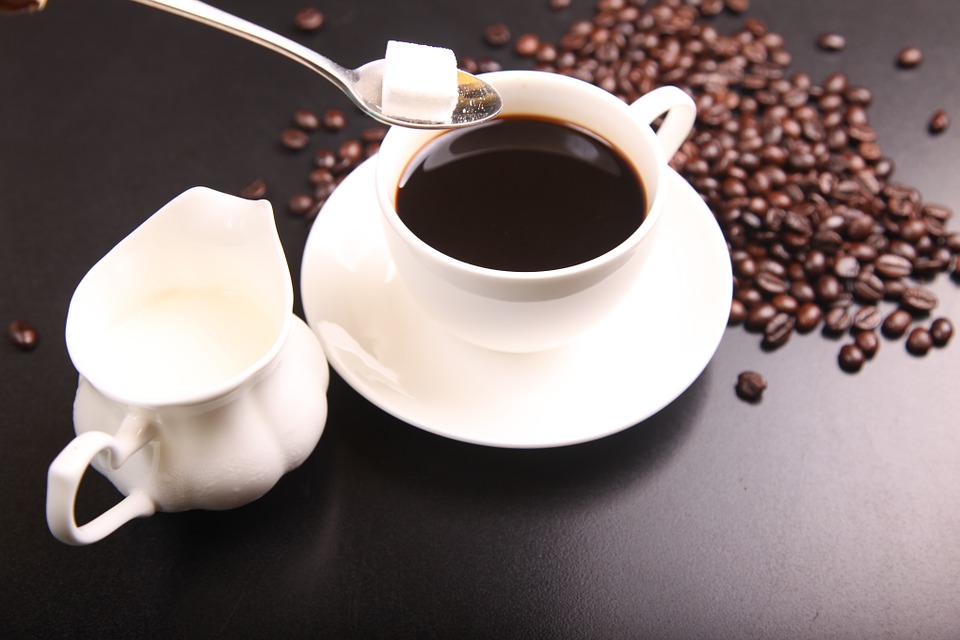
Photo via Fooyoh

Coffee Drinking and Kids

Coffee and kids don’t mix; at least that’s what they tell us. Common sense also tells us that this is true, especially with countless sources telling us of the bad effects of caffeine on your body.

Lately though, with the popularity of huge coffee chains like Starbucks, the sight of teenagers, even kids, drinking coffee is something that is becoming more common. Are parents wrong to let their kids drink coffee?

I believe that coffee drinking, as with most things, is not bad unless you take it to the extreme (Attention caffeine addicts!  ^_^). Coffee may contain caffeine, which has been proven to be addictive, but more and more studies are also showing that coffee may have more health benefits than we realize; in fact it may actually be beneficial to people suffering from Type II diabetes, hepatitis C, and skin cancer. The question now is whether the positive effects outweigh the negative ones.

With conflicting studies on the benefits and harm that coffee and caffeine bring, I think that it is impossible to draw a conclusion at this point. So instead of overly worrying about the issue, I would just let my kid drink coffee IN MODERATION and let him enjoy the treat, just like he gets his sweets every now and then. I do not say that he should get a full cup of coffee every single morning, but he sure can take a sip from my cup whenever he wants to (except late in the afternoon and at night because that’s asking for trouble come bedtime). Of course it goes without saying that they should never drink enough for it to replace their regular nutritional drink (read: milk). And as for teenagers who need an energy boost now and then to help them stay awake during exam week, I’d rather see them sipping on a cup of coffee rather than downing bottle after bottle of energy drinks!

What do you think? Is letting your kid drink coffee a sign of bad parenting?

Image credit: David White Design

Coffee and Diabetes

Coffee has long had bad press in regards to health issues – the caffeine in it is linked to addiction, dehydration, panic attacks and the advice to pregnant and lactacting mothers is that they should avoid drinking it as much as possible.

Coffee Health

But recent studies have shown that there is getting to be more and more positive reasons for drinking your daily cup of Java – not only does it help fight heart disease, headaches, asthma and Parkinsons, a recent study that has been published shows that it’s able to reduce the likelihood of developing diabetes.

The tests, which were carried out on Lab mice found prone to develop Diabetes have shown that the sample group given coffee (compared to Water) displayed signs of improved insulin sensitivity, and did not develop high blood sugar levels.  The research also found that coffee has beneficial effects combating fatty liver tissue.

Past tests have also shown that drinking Coffee reduces the likelihood to develop diabetes. Women have been found to be more responsive to change compared to their male counterparts. When drinking six cups per day, the test subjects were (over eleven years) twenty two percent less likely to develop diabetes, compared to those who drank no coffee.

The main type of diabetes that Coffee is found to be especially useful in protecting against is Type II. Of course, combating this disease (one of the leading causes of death in the United States and across the world) can often postpone the offset of type II diabetes in the majority of people.

Photo Courtesy of: Untitled Blue

Coffee for the Skin

coffee skin care productsI depend on my morning cup of coffee. I’d rather have brewed coffee, of course, but when on trips, sometimes, I have had to settle for the instant kind. It does not matter, as long as I have my morning dose of caffeine – taken orally in the form of a hot cup of coffee.

I was pleasantly surprised and amused when I read about skin care companies experimenting with coffee-based products, though. Does coffee have skin care properties? Though I have not really seen or tried these products, it seems that in the US and other world markets, coffee-based skin products were released last year.

The idea is that caffeine perks you up – thus my dependence on that morning cup. Skin care companies think that if applied topically, their coffee-based products could perk you up as well and make your skin look and feel better. I don’t know about this, but it could work.

Then again, if you are thinking of using coffee-based skin products to perk you up, I doubt that it will be as effective and as enjoyable as simply brewing a pot of coffee and drinking a cup or two. For one, though the products may contain caffeine, I doubt that there is enough there to give you a jolt. Another thing is that these products are applied topically. That means that if the caffeine is to enter your blood stream, it has to go through the skin – that takes a while and the amount is probably small. The bright side is that you will smell like coffee all day long!

In any case, these products should be worth a try, don’t you think?

Coffee Breath

coffee dinner mints.jpgThe girls got together for our day out. Our agreement is that this is a girls only day; no husbands, boyfriends, life partners, kids, parents or work allowed to intrude. It is time to take care of the women and enjoy one day without responsibilities. Thankfully, our families understand.

One of the girls mentioned that she recently had a meeting with a client. She walked in the door and as he spoke, she felt a bit dizzy. No, it wasn’t his gorgeous good looks that caused the
sensation. It was his coffee breath!

Most people are unaware that they have halitosis. Everybody gets them at some point. Coffee drinkers smell coffee on their breath and think absolutely nothing of it since they love coffee.

Unfortunately, the smell of coffee on someone’s breath isn’t always pleasant. Coffee is acidic. The acid combined with the bacteria in our mouth isn’t exactly the best scent around. The odor can ensure that people will give you a wide berth. Hmmm…not the reaction you want if you are running for Hunk or Babe of the Year.

Fortunately, there are some simple solutions that do not require you to give up your favorite coffee drink.

  1. Develop good oral hygiene
    • Brush your teeth properly and carefully twice a day
    • Floss at least once a day before brushing
    • Rinse your mouth with water especially after drinking or eating
    • Clean your tongue well
  2. Drink a lot of water. Two glasses for every cup of coffee is good for cleansing.
  3. Add food that can help improve the scent of your breath to your diet such as apples, carrots and celery.

In a pinch, there’s always Altoids of course. People around you will appreciate it.

Magic Power Coffee: Stay Away!

We’ve heard of all sorts of coffee drinks that claim various benefits. I am talking about slimming coffees and the like, but until a few minutes ago, I had never heard of Magic Power Coffee! Some of you might know about it, but for the sake of those like me, allow me to briefly describe this product.

Magic Power Coffee is being marketed all over the United States as an instant coffee drink. The uniqueness of this product lies in the claim that it functions as an aphrodisiac. Yup, it is supposed to stimulate sexual arousal in both men and women!

So what’s wrong with that? It could very well be a better alternative to Viagra, right?

The FDA, however, disagrees, and has released a statement to the effect that it can be harmful. The government agency is quite worried about the fact that the coffee drink is labeled as an “all natural dietary supplement.” You know how it is these days – people market products as “all natural” and as a “dietary supplement,” and these products are supposed to be 100% safe.

I guess there is no such thing, though. A spokesperson from the FDA says that the label is misleading, and that in fact, Magic Power Coffee can cause serious damage. Men who are using certain prescription drugs, for example, can experience a sudden plummet in blood pressure due to the interaction of the active ingredients.

If you still wish to try the potency of this magic drink, I suggest you check with your doctor first. Better yet, just stick to the good old brew!

Shorter Babies Result From Heavy Caffeine Intake

I wonder if my mom had a lot of coffee while she was carrying me! I highly doubt it, as she is not really much of a coffee drinker now. Anyhow, a group of researchers from The Netherlands recently released the findings of their study: the amount of caffeine intake that a mother has during pregnancy can affect the size of her baby.

The study shows that the effects of caffeine can already be significant in the first trimester, especially if the mother takes 6 cups (or more) of coffee per day. The researchers are from Erasmus Medical Centre in Rotterdam and they conducted the studies on 7,300 Dutch women. When the study commenced, the women were all in their early stages of pregnancy. Some of them were heavy coffee drinkers while some were not.

So what does this mean for pregnant women or women who are planning on getting pregnant?

I suppose the study can serve as a warning. While it does not say that more serious issues may arise from heavy caffeine intake during pregnancy, it is better to be safe than sorry. Still, I can’t really just take these results without any doubts. What about those other studies that say that drinking coffee during pregnancy is okay? More so, the researchers behind this most recent study say that their findings are not conclusive and that they need more information – to which I say again “as usual.”

So, if you want to increase your chances of having a tall kid – just lay off on the caffeine. Your kid will thank you for it.

Dark Brewed Coffee: Stomach Problem Cure

I must be pulling your leg, right? To be honest, I am not quite convinced about this piece of news, but it is just too good not to share. According to new research (we have new studies ALL THE TIME, don’t we?), there is something in dark brewed coffee that can help stomach problems.

This is what The Med Guru says:

People who were earlier forced to resist the much-desired morning coffee cup due to the fear of stomach pain can now have it without another thought, claimed the study.

“This discovery is going to help a lot of people who suffer from coffee sensitivity. As coffee-lovers, we’re very excited about this research,” said Dr. Veronika Somoza from the University of Vienna in Austria, and Dr. Thomas Hofmann, from the Technische Universitat Munchen in Germany, who conducted the study.

Don’t get me wrong – I am very much in support of the idea behind the study, but my experience does not seem to agree with the findings. I have a very acidic stomach, and it just gets worse whenever I have too much coffee. And, yes, I do drink black brewed coffee for the most part. As much as I love coffee, I have to admit that I have had to cut back so many times due to the stomach problems.

They say it’s all about this component:

The study found that the components that triggered molecular mechanism of acid production in the stomach cells were caffeine, catechols and N-alkanoly-5-hydroxytryptamides.

The finding revealed that there wasn’t one single irritant, but a mixture of compounds that caused the irritant property of coffee.

Moreover, one of the components, N-methylpyridium (NMP), helped in stagnating the production of hydrochloric acid by the stomach cells, which can reduce stomach irritation.

The darker roasted coffee beans contain almost twice the amount of NMP than the raw coffee beans. The level of NMP in the beans depends on the roasting method and the natural variety of the bean, revealed the researchers.

I guess it’s now a question of making sure that we get the component, isn’t it?

Coffee Can Lead To Food Addiction

And you’re telling me that NOW? I know, this kind of news is simply not welcome at certain times. While we’re in the middle of Lent, a lot of people are actually practicing abstinence of one sort or another. No need to talk about food, right?

Sorry, I can’t help but share the results of this recent study that I just read about. According to the article, fatty food and junk food are addictive; and this includes items like coffee, sugar, and meat. More:

Paul Kenny at Scripps Research Institute in Jupiter, Fla and colleagues also found when junk addictive foods like bacon, sausage, pound cake, and candy bars were removed from their diet, the rats went on a hunger strike – they did not eat anything for two weeks.
Furthermore, the researchers discovered that eating the addictive food literally changed brain chemistry by suppressing the dopamine D2 receptor in the brain’s reward system, leading to compulsive eating.
The study suggests that the tasty junk foods may play a big role in the national obesity epidemic.

Seriously, people. Get a life! We know that we get addicted to food. We know that certain people get addicted more easily. But, we also know that we can’t live without coffee. So what do you expect us to do?

You know what I was thinking? If the researchers keep it up, we just might have organizations for coffee addicts in the next several years. We might even have programs that will help people get off of their coffee addiction. Oh how sad.

Batangas Coffee Organic Soap

Batangas coffee is my coffee of choice. It has a very bold flavor which makes many other blends pale in comparison. Unsurprisingly, I have only used this coffee for drinking purposes. To my delight, however, I discovered another use for Batangas coffee. Last month, a colleague of mine went around the office selling organic soaps, and guess what? She had something made of Batangas coffee!

The manufacturer is called Cycleina and they specialize in all sorts of organic soap. I have actually used a lot of their other varieties (flavors, if you will) but nothing has made me more satisfied than their Batangas coffee one. The soap bar is square shaped and not too thick. The best thing about it is that it has coffee grounds incorporated into the bar. The result is silky smooth skin because the grounds serve as a gentle exfoliant!

Seriously, I do not even have to use my loofah anymore when I use this soap when taking a shower. I am not so sure about its effectiveness as a facial soap – I am a bit iffy about using it as I am particular when it comes to facial products – but I do not see any serious problems with it. My bar is now gone, and I need to stock up. Oh, the best thing about it is it’s so cheap! Less than 2 dollars for one bar of sheer happiness! I wish they made lotions in the same variety. That would complete the bath set, wouldn’t it?

Next Page »