Drip Brewing with a Paper Filter

Drip brew is a method for brewing coffee which involves pouring water over coffee contained in a filter. Water seeps through the coffee, absorbing its oils and essences, solely under gravity then passes through the bottom of the filter. The used coffee grounds are retained in the filter with the liquid falling (dripping) into a collecting vessel such as a carafe or pot.
Paper filters are commonly used for drip brew all over the world. One benefit of paper filters is that the used grounds and the filter may be disposed of together, without a need to clean the filter. However, metal filters are also common, especially in India. These are made of thin perforated metal sheets that restrain the grounds but allow the coffee to pass, thus eliminating the need to have to purchase separate filters which sometimes cannot be found in some parts of the world.
Drip brewing is the most popular method of coffee brewing, owing to the overwhelming popularity of the automatic drip brewing coffee machine. There are, however, several manual drip-brewing devices on the market, offering a little more control over brewing parameters than automatic machines. There also exist small, portable, single serving drip brew makers that only hold the paper filter and rest on top of a cup. Hot water is poured in and drips directly into the cup.
Brewing with a paper filter produces clear, light-bodied coffee, which is free of sediments, but lacking in some of coffee’s oils and essences, which are trapped in the paper filter.
Affogato al Caffe
What is the best thing to have after a huge turkey dinner? I am sure you already know my answer – coffee! This, of course, is subject to interpretation or personal preference but you cannot deny that a nice cup of coffee after a filling meal is always welcome. For Thanksgiving this year, I think I am going to try something new. Instead of the good old brewed coffee or even café latte, I want to serve a different coffee drink. As such, I have been on the (online) prowl for a recipe that could be prove to be interesting.
Trust Mario Batali, who is perhaps my favorite Iron Chef, to provide me with the perfect coffee recipe dubbed Affogato al Caffe. Apparently, he published this recipe way back in 2000 but I have never come across it before. It does look interesting, though:
Ingredients
Semifreddo
• 2 1/2 cups whole milk
• 3 ounces very strong espresso
• 6 egg yolks
• 1 cup sugar
• 1 tablespoon vanilla extract
• 2 cups heavy cream
• 8 cups strong decaffeinated coffee, cooled
• 1/4 cup unsweetened cocoa powderPreparation
In a 3-quart saucepan bring the milk to a boil over medium-high heat. Remove from heat and add the espresso.In a mixing bowl, beat the yolks until pale yellow. Gradually add the sugar and beat until light yellow ribbons form when the beaters are lifted. Stir in half of the hot milk, then stir in the remaining milk.
Cook over low heat without boiling until the mixture coats the back of a spoon thickly and sets slightly, about 4 to 5 minutes. Stir in the vanilla and chill for 1/2 hour.
Whip 1 1/2 cups of the cream to stiff peaks and fold into the custard mixture. Transfer to an ice cream machine and freeze according to manufacturer’s instructions. (The semifreddo can be made up to 2 weeks in advance).
Whip the remaining 1/2 cup cream to soft peaks. Place 1 scoop of semifreddo in each of eight tall glasses. Pour 1 cup of cooled coffee over each scoop, dollop with whipped cream, and dust with cocoa.
This makes 8 servings.
I would really love to make this – if I can find an ice cream machine to use!
New Technology For A Perfect Cup Of Brewed Coffee
I have always perceived myself as a simple person. Even when it comes to coffee, I do not really pay that much attention to the technicalities – temperature, timing, and so on. All I know is that if a cup of coffee tastes good to me, then I am happy.
Purists would certainly scoff at my attitude but I am sure that they would be happy to know that there is new technology that has been developed to enable average people to brew coffee perfectly. Dubbed the ExtractMoJo(TM), the technology “combines a sophisticated coffee analytics software application and a specially designed, hand-held digital refractometer that enables users to quickly and simply calibrate their existing equipment to brew coffee that meets high quality, internationally recognized Gold Cup standards with cup-to-cup consistency.”
This was developed by the George Howell Coffee Company and free trial software is available at http://software.terroircoffee.com. So basically, you still need brewing equipment. The product is merely a tool to help you calibrate what existing equipment that you have.
ExtractMoJo includes the ability to design, save, chart, print and recall unlimited coffee brewing recipes. ExtractMoJo improves coffee quality dramatically, allowing users to keep extraction and strength to the desired ranges, for consistently great tasting coffee without the guesswork and limitations of former techniques.
I guess that’s me – the guesswork part, that is. I do not know if I would be able to use this software. Perhaps those who operate cafes and restaurants might find better use for it than I would. Would you buy this software?
Different Brewing Techniques (Part 4)
I am down to one last technique that I find really interesting. Although I normally use the drip machine at home, there is one other brewing method that I like.
French Press or Press Pot
French-press brewing gives the operator complete control. While it may be more labor-intensive than autodrip, the brewing variables can be easily and directly controlled. Coarsely ground coffee is placed in the glass carafe, then water at the desired temperature is poured over the grounds and the top is placed on. When brewing is complete, the plunger (a mesh filter on a stick) is pressed down, pressing the grounds to the bottom and leaving the coffee liquor on top to be poured off. The filter is not as tight as a paper filter and because of the larger pores, a coarser grind is required so the grounds are filtered out, and the plunger does not become almost impossible to press down. The mesh of the filter allows the coffee oils and all those delicious dissolved and undissolved solids through without a problem. Also, because a coarser grind is required, a longer steep time is required (because of the decreased surface area to volume ratio). A brew time between 3 to 6 minutes is common for French-pressing. This prolonged, direct contact of the grounds with the water allows for a more complete, more controllable, and even extraction. Unfortunately, even with the highest quality burr coffee grinder or mill, a coarse grind will still result in some very small coffee grounds. These grounds are not filtered by the French-press filter and thus end up in the cup. A cup of French-pressed coffee with be noticeably fuller, with much more body, and often with more flavor, it will often also have the tell-tale sediment at the bottom of the cup.
Alexander Haas’s description is very accurate – the flavor is really impressive when coffee is made in a French press. The grounds can really get me all riled up sometimes, though. More often than not, however, I can take that.
What is your favorite means of brewing coffee?
Different Brewing Techniques (Part 3)
Are you up for more different brewing techniques? Well, I have more for you.
Autodrip
Autodrip! This is the most popular way to brew in the US. Drip brewing is simply pouring hot water over grounds in a filter and letting the brew drip out the bottom. Drip brewing is a very good way to brew and can give an excellent cup if the correct equipment is used. A primary issue with autodrip machines is that they don’t brew at the right temperature! I have read that Bunn is one of the few companies who’s machines are calibrated to extract at the right temperature. If one has a good autodrip machine or one decides to heat and pour the water themselves, the next issue to surmount is the filter. Paper filters can impart a taste on the coffee and also do not allow many of the coffee oils and organic compounds through. A good gold-plated reusable filter (we do carry some) is a great option for drip brewing. Provided you clean and rinse it well after each use, it will not impart a taste on the coffee, and they don’t trap as much of the coffee’s essence as a paper filter. Another slight drawback is that drip brewing, in general, does not give the operator much control over extraction time.
To be honest, this is the method that I use daily. I only have a drip machine at home and I think that it does the job pretty well. I do understand the thing about paper filters imparting a certain taste – if you get the “bad” kind of filter. I got a set of paper filters from The Coffee Bean, though, and they were perfect.
Different Brewing Techniques (Part 2)
In the last post, we took a look at how the Middle Easterns brew their coffee. Soon after that, I went around the city looking for Turkish coffee – well not really, I just looked online for shops that brew coffee this way. I turned up with nothing. Perhaps I should look for the restaurants later – they just might offer this kind of coffee. Anyhow, here are a couple more brewing techniques, again courtesy of Alexander Haas.
Concentrate Brewing
The next method, concentrate brewing, is very popular in Latin America and some other parts of the world, and is starting to make a commercial appearance in the US. In concentrate brewing, large amounts of coffee are brewed with little water to brew a concentrate, when one desires a cup of coffee, some of the concentrate is mixed with some hot water. The concentrate can either be brewed hot or cold. When brewing cold one must let the coffee sit for at least a day. This method results in a mild, light-bodied cup with little aroma, and often little acidity and a muted flavor.
This sounds interesting as well – although I don’t know if the flavor will be strong enough.
Percolating
Percolating, the procedure that involves continuous brewing of coffee grounds using boiling water which then turns to boiling coffee liquor brewing overextracted grounds. This method, while practical, is a disparaging disgrace to the coffee bean. Even brewing with boiling water is bad enough (coffee should be extracted at 195 – 205 degrees F), then actually boiling the liquor is asking for a thin, bitter, tarry cup. To add insult to a sufficient mangling, the grounds are continuously being overextracted.
I am not so sure that this method is so bad. I actually like coffee which is percolated, do you?
Different Brewing Techniques
I am sure that you know that there are various ways by which you can brew coffee. But do you know them in detail? I certainly don’t! All I know is that my drip coffee machine works just fine. I found a very informative article on various coffee brewing techniques and thought I’d share them here.
Thanks to Alexander Haas for this information. According to him, there are 6 primary ways of brewing coffee. Here they are.
Middle Eastern, “Turkish” or “Greek”
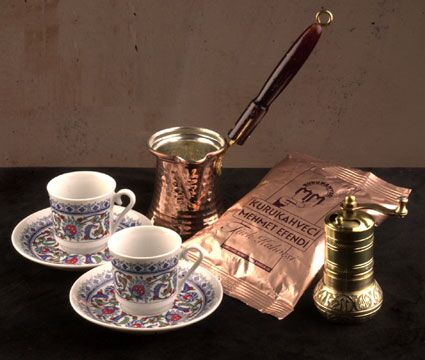
Middle Eastern, “Turkish” or “Greek” brewing involves boiling in water coffee that was ground into a very fine dust. Traditionally the coffee is often brewed (boiled) with large amounts of sugar, but it may be brewed without the sugar. Middle Easterners seem to like to add spice to their coffee, and their spice of choice is often cardamom. The coffee is not filtered from the liquor and one is left with a pungent, thick, and muddy brew. In the western world this method is more of an occasional indulgence as opposed to an everyday brew.
I have read about how the Middle Easterners like their brew really thick. I have not tried it myself but I am not sure about having grounds in my drink. The spices, however, make sense. I have only added cinnamon to my coffee but am open to other stronger spices. How about you?
Let’s look at other methods of brewing next time.
Cheese On Your Coffee, Anyone?

Uh, I don’t know about that. I mean, my second favorite drink in the whole wide world is coffee (first is water – yeah I am boring) and I can’t get enough of various types of cheese (check my last grocery bill and you’ll see LOTS of different cheese in there). I have not really thought of mixing the two together, have you?
This girl in Canada, Laura Perry, thinks otherwise and judges of the Eastern Regional Barista Championship in Montreal agree with her! The story featured in Ottawa Citizen narrates her victory:
Mascarpone cheese is not the first ingredient the average coffee drinker would put into an espresso. But Kanata’s Laura Perry is no ordinary coffee aficionado, using the unusual concoction to win the Eastern Regional Barista Championship this week in Montreal.
The 22-year-old’s victory will make her the only Ottawa resident to compete in October at the Canadian National Barista Championships, the Grey Cup of competitive coffee-making in Canada.
The drink, named Mascarpone Macchiato, is a shot of espresso marked with a bit of steam milk. It is blended with a variety of ingredients, including whipped mascarpone cheese, sugar cane and cinnamon bark.
For those who wince at cheese and coffee, Perry says she uses mascarpone for its light cream qualities. “It doesn’t really taste like cheese.”
For someone who likes cheese, I am pretty ignorant about a lot of types and I have not heard of mascarpone before. I found this at Wikipedia:
Mascarpone is a triple-cream cheese (though more accurately a lightly-whipped cream) made from crème fraîche, denatured with tartaric acid. Mascarpone is milky-white in color and is easily spread. When fresh, it smells like milk and cream. It is used in various dishes of the Lombardy region of Italy, where it is a specialty. It is a main ingredient of tiramisu.
I feel a bit stupid as I love tiramisu but now I understand how mascarpone can go well with coffee. I wonder if we’ll ever get to taste the likes of this coffee?
Iced Coffee Not Hot?
Coffee is usually known to be best served when hot. But for the innovative and creative minds of coffee lovers, the prickly heat of seasons such as summer would get them to think of new ways to enjoy the usual hot beverage that opens the eyes of sleepy people. That has totally changed today in the world of coffee.
Everyone is aware of such new brews, especially for people who have tried out the cold Starbucks drinks like frappuccino and ice blends. These are clear examples of new ideas brought out in the market. To top it all off, they are hits in the regions and have made other coffee manufacturers and shops create their own drinks as well.
Hence the initial notion of coffee being solely good when hot has been slowly disintegrating. Hot or cold, coffee can be enjoyed depending on the preference and want of people who love to drink a good coffee brew.
Technorati Tags: coffee blends, coffee, iced coffee, frappuccino
Coffee Crumbles from Attention
Coffee is one thing that people have gotten used to having and a lot of them are made all over the world. While they can be easily found, especially for coffee manufacturers who have employed the use of affordable search engine optimization as offered by Los Angeles SEO, people who have taken this practice over the web for granted have been left out in the dust. They can be seen scratching their heads on why their acclaimed good products are not getting the attention that they should be getting.
Is it any wonder why? The Internet is the prime source of information today. The broad scope is able to reach billions of people in one sitting and perhaps this is what puzzles them. There is more to websites than just being put up. The marketing aspects of making them found is another and site owners should be open to that, including coffee manufacturers today.